Why Modern Minds Struggle to Pray
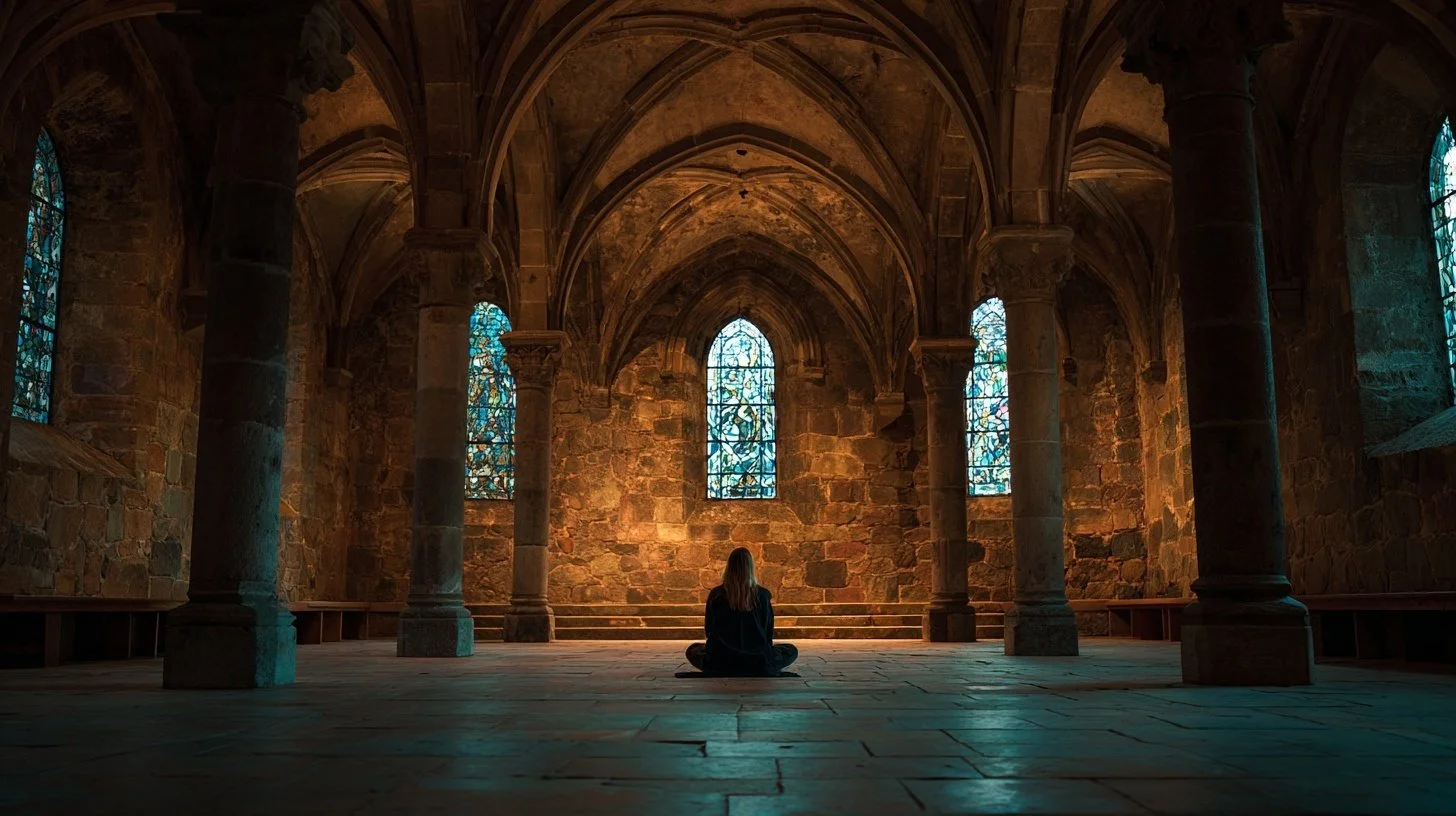
Prayer has not disappeared. What has weakened is the inner condition that makes prayer come naturally.
Modern life trains the mind toward speed, analysis, stimulation, control, and constant outward attention. Prayer asks for something very different: silence, receptivity, steadiness, inwardness, patience, and the ability to remain present without immediate reward. This tension may help explain why prayer feels less accessible to many people today than it once did.
It is tempting to describe this shift in simple “left brain versus right brain” terms. There is some truth behind the broader intuition that different modes of attention exist, and that modern culture overvalues one kind at the expense of another. But neuroscience does not support the crude popular idea that some people are simply “left-brained” and others “right-brained,” or that one hemisphere alone explains complex spiritual difficulties. Hemispheric specialization is real, but most important human capacities depend on distributed networks across both sides of the brain.
Still, the deeper concern remains valid. Prayer often depends on forms of attention that modern life does not train well. It asks for sustained inward focus rather than fragmented attention, surrender rather than control, and depth rather than rapid cognitive switching. In practice, many people live in conditions that continuously erode these capacities: digital distraction, overstimulation, mental noise, pressure toward productivity, and the habit of evaluating everything through immediate utility. This does not make prayer impossible, but it can make it feel remote, strained, or unnatural.
Research on meditation and related contemplative practices offers a useful lens here. Reviews and imaging studies suggest that contemplative training can improve emotional regulation, alter patterns of attention, and reduce forms of self-referential processing and mind-wandering associated with default mode network activity. These findings do not prove a theology of prayer, but they do suggest that the mind can be trained away from chronic distraction and toward a more stable, receptive state.
The neuroscience of prayer itself remains early and methodologically mixed, but existing work suggests that prayer is not a trivial mental event. A recent systematic review of Christian prayer found recurring interest in neural regions involved in attachment, social cognition, and internally directed experience, supporting the idea that prayer may be experienced not merely as private thought, but as a form of relation.
This is where practice matters. If modern habits of mind have made prayer more difficult, then prayer may need to be recovered as a discipline before it can be recovered as an experience. Repetition, silence, contemplative attention, deep meditation, and faith may help re-form the inner posture that prayer requires. In this sense, prayer is not simply a belief or a ritual. It is also a capacity, one that can weaken through neglect and strengthen through faithful use.
At Holy, we are interested in the recovery of that capacity. Not as nostalgia, and not as a rejection of reason, but as the restoration of a neglected dimension of human consciousness. The goal is not to abandon intellect, but to place it back into balance with contemplation, reverence, and the kind of inward attention through which prayer becomes possible again.
References
Calderone, A., et al. “Neurobiological Changes Induced by Mindfulness and Related Practices: A Review.” 2024. PMC.
Devaney, K. J., et al. “Attention and Default Mode Network Assessments of Meditation Experience.” 2021. PMC.
Garrison, K. A., et al. “Meditation Leads to Reduced Default Mode Network Activity beyond an Active Task.” 2015.
Haverkamp, E., van Elk, M., Schjoedt, U., and Brandstätter, T. “The Convergent Neuroscience of Christian Prayer and Attachment Relationships: A Systematic Review.” 2025.
Nielsen, J. A., et al. “An Evaluation of the Left-Brain vs. Right-Brain Hypothesis with Resting State Functional Connectivity Magnetic Resonance Imaging.” 2013.
Crosswell, A. D., et al. “Deep Rest: An Integrative Model of How Contemplative Practices May Influence Psychological and Physiological Well-Being.” 2024.
A stronger subtitle option would be:
On distraction, analysis, contemplation, and the recovery of prayer.
And if you want a slightly more elevated final sentence for Holy, use this:
Prayer may not have become less real. We may simply have become less inwardly available to it.